

Rediscovering Our Revolutionary Tradition and the Siege of Yorktown’s Maritime Battlefield
Funding from a federal grant program will be used to conserve more than 500 artifacts associated with the maritime battle of the Siege of Yorktown.
Submitted by Division of State Archaeology | Photographs: DHR
DHR’s Division of State Archaeology staff are pleased to announce that they are a member of a consortium led by The Mariners’ Museum and Park that will be working with collections from the 1781 Siege of Yorktown. Approximately 516 maritime archaeological items from the Siege and Battle will be treated, rehoused, and cataloged, making them available for research and community engagement. At the conclusion of the project, the collections will be available digitally, allowing wide access to these objects from one of the most pivotal battles from the Revolutionary War (1775–1783).
This work is funded by a grant of more than $745,000 from the National Endowment for the Humanities's (NEH) Rediscovering Our Revolutionary Tradition program awarded to The Mariners’ Museum. The project will conclude in 2031, in time for the 250th anniversary of the Battle of Yorktown.
The Siege of Yorktown in 1781 was the final major land engagement in the Revolutionary War. By the end of the Siege, which concluded with the surrender of British General Charles Cornwallis on October 19, some 40 British ships had been sunk by enemy cannon fire or deliberately scuttled by Cornwallis to hinder the river landing of troops from French ships. In 1973, the Yorktown Shipwrecks became the first underwater district to be placed on the National Register of Historic Places, which led to the first comprehensive survey of the vessels in the York River in 1978. During this survey, nine of an estimated 26 ships from General Cornwallis’ fleet were identified.
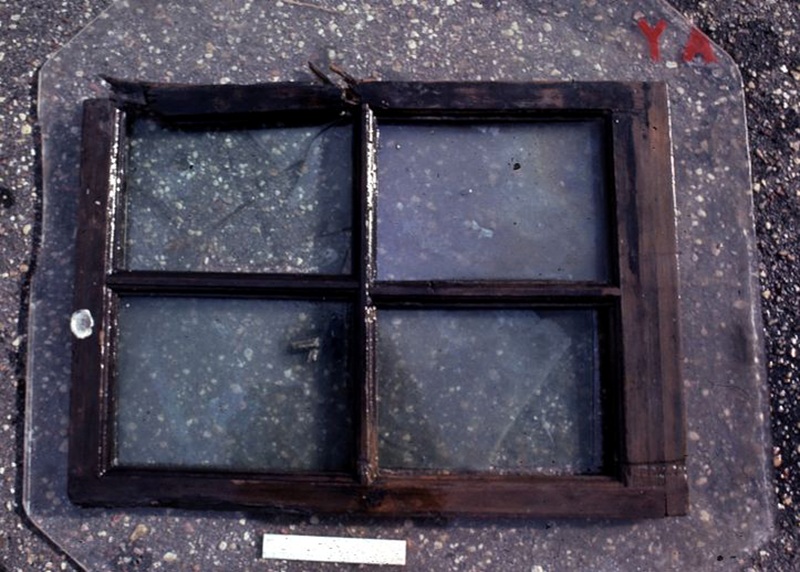
In 1982, archaeologists led by then-DHR underwater archaeologist Dr. John Broadwater erected a cofferdam around the area where one of these surveyed ships had sunk. The cofferdam, a structure built into the riverbed around the site, allowed the water to be filtered, providing better visibility for underwater archaeologists who excavated the ship’s remains during the Yorktown Shipwreck Project. About 50 percent of the ship’s contents survived, and these artifacts, once retrieved, were then conserved, catalogued, and deposited in DHR’s Collections. The ship was identified as Betsy, a merchant ship, that was built in 1772 in Whitehaven, England, and served as one of the supply vessels for the British fleet. No weapons, other than one gun carriage, were found on the ship. However, many other materials were found, including more than 10,000 musket balls, small and large barrels, beams, pieces of hull, planks, bottles, jars, ceramics, furniture pieces, personal items such as shoes and buttons, as well as other organic and inorganic material.
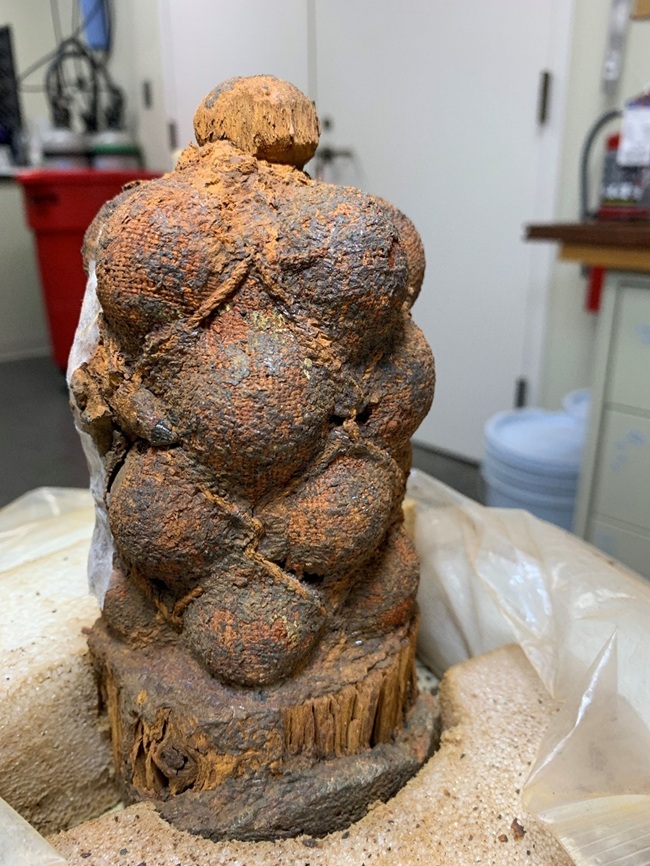
Originally, Betsy served as a collier, a ship used to transport coal from Britain. But during the Revolutionary War, Betsy was one of many ships scuttled by the British Navy in the York River as an attempt to prevent the French Navy, a key ally of the Patriot cause, from drawing close to Yorktown. Fortunately for the Patriots, the British had miscalculated the range of the French guns, and the French ships were still able to fire on the coast during the Siege.
The excavation of Betsy was a comprehensive undertaking that involved the recovery of several thousand artifacts and hundreds of pieces of the ship and its rigging. These artifacts are constructed of a variety of materials, with a great number of them being constructed of organic materials. Betsy was chosen from the dozens of shipwrecks for recovery due to its preservation. Many parts of the ship, rope, sailcloth, and other pieces of rigging were excavated.
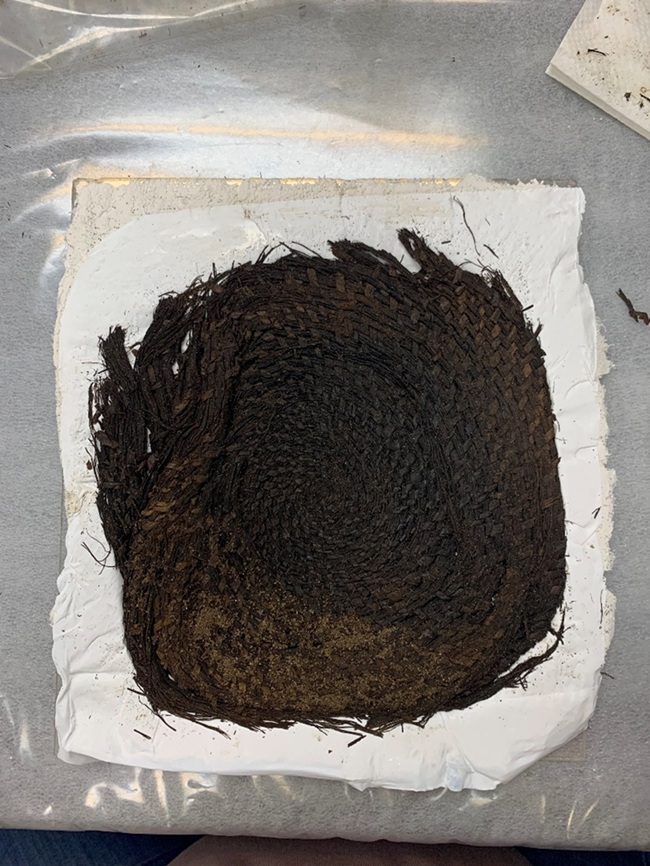
As the organic artifacts were raised to the surface, they were kept wet and then sent to a conservation lab for evaluation and potential treatment. Once artifacts were treated, they were placed in sealed bags for storage. Some of the more flexible artifacts, such as the rope, were also placed on support boards. These boards were made from Plexiglas or pieces of cardboard that were covered in plastic before the artifact was put on them. Not all objects were treated at this time, and some objects that were treated previously now need re-treatment with modern techniques and materials. Conservation can be very expensive work; it is labor-intensive and some objects require large quantities of expensive chemicals. The public-private partnership supported with this grant is a way of leveraging expertise and funds to preserve the objects that represent an important time in American history in a cost-effective manner.
Most of the collections at DHR from the Siege were recovered from Betsy, but we also have 30 boxes from other shipwrecks that were a part of the battle. There are a variety of objects in this collection, including shoes worn by sailors on Betsy, which were left behind when she was scuttled, pieces of sailcloth, a cockade fragment, pits from fruits, and other organic materials used to construct the vessel. Metal objects include numerous lead musket balls, pewter buttons and spoons, copper buckles, coins, and sheathing, as well as many iron artifacts that were onboard or used in the vessel’s construction. Objects to be conserved with the support of this grant will be selected as the project progresses. This consortium of public and private organizations is a good example of how we can share knowledge, expertise, resources, and grant funds to benefit the public as we preserve these important pieces of history.
Legal Disclaimer:
EIN Presswire provides this news content "as is" without warranty of any kind. We do not accept any responsibility or liability for the accuracy, content, images, videos, licenses, completeness, legality, or reliability of the information contained in this article. If you have any complaints or copyright issues related to this article, kindly contact the author above.
