

Yerba Mate Market to Reach US$ 3.0 Billion by 2033, Driven by Rising Health Awareness
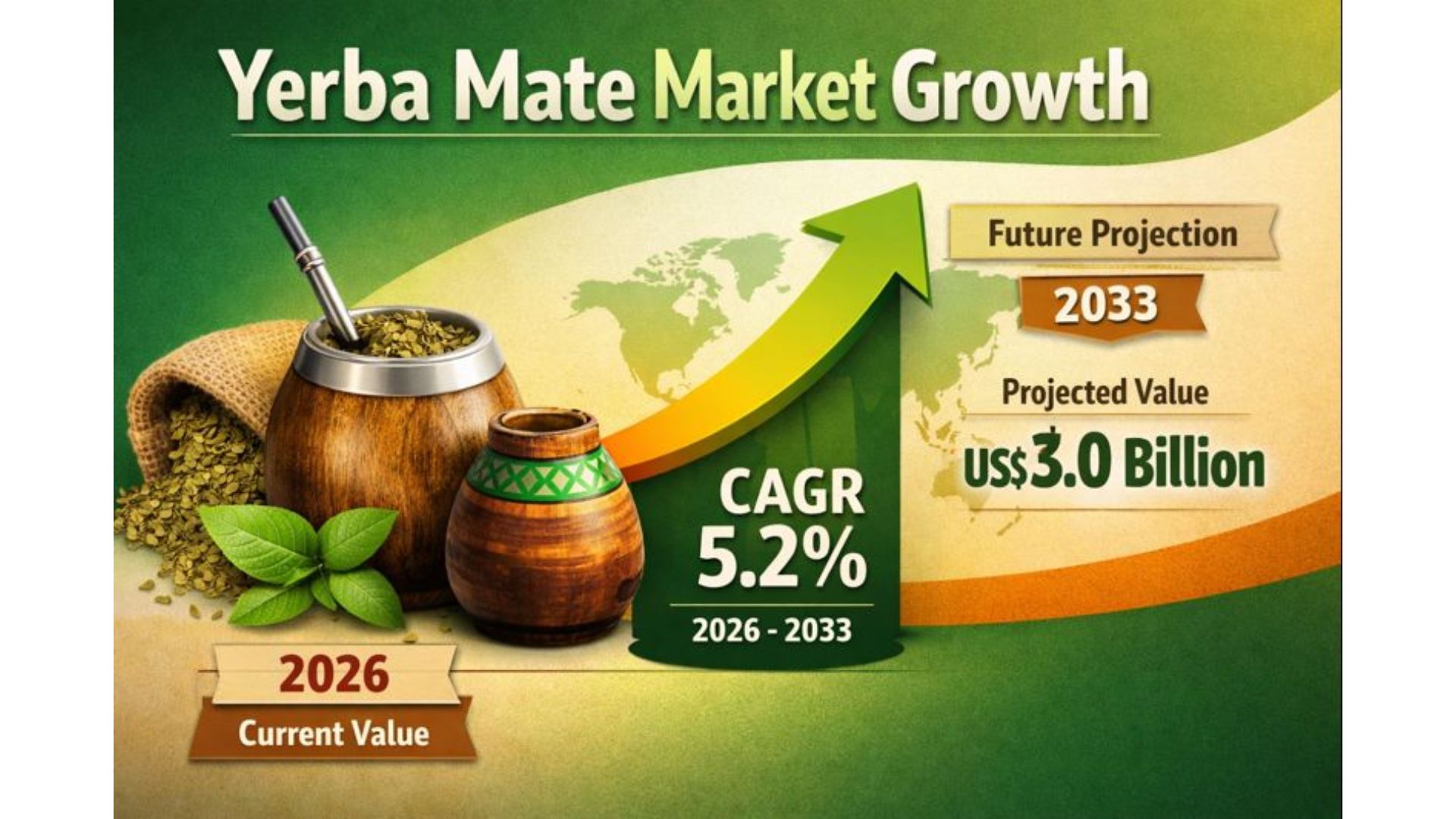
The yerba mate market is set to grow from US$2.1 Bn in 2026 to US$3.0 Bn by 2033, driven by rising demand and a steady 5.2% CAGR
BRENTFORD, ENGLAND, UNITED KINGDOM, February 17, 2026 /EINPresswire.com/ -- The global yerba mate market is entering a phase of sustained growth, supported by rising consumer interest in natural energy beverages, plant-based wellness products, and functional drinks. The market size is projected to reach US$ 2.1 billion in 2026, and is expected to expand to approximately US$ 3.0 billion by 2033, reflecting a compound annual growth rate (CAGR) of 5.2% during the forecast period 2026–2033. This upward trajectory underscores the growing global acceptance of yerba mate as both a traditional beverage and a modern health-oriented product.
Yerba mate, derived from the leaves of the Ilex paraguariensis plant, has long been consumed in South America for its stimulating and antioxidant properties. In recent years, it has gained increasing popularity in North America, Europe, and parts of Asia as consumers seek alternatives to coffee, synthetic energy drinks, and carbonated beverages. The beverage’s natural caffeine content, combined with the presence of vitamins, minerals, and bioactive compounds, positions it as a premium functional drink within the broader health and wellness market.
Market growth is primarily driven by increasing awareness of the health benefits associated with yerba mate consumption, including enhanced mental focus, improved metabolism, and antioxidant support. The global shift toward clean-label and organic beverages is further contributing to demand, as consumers prioritize transparency in ingredient sourcing and production methods. Additionally, the expansion of ready-to-drink (RTD) beverage formats, innovative flavor profiles, and convenient packaging solutions is making yerba mate more accessible to mainstream consumers.
The growing popularity of plant-based lifestyles and natural stimulants has also played a pivotal role in boosting demand. As consumers increasingly move away from artificial additives and high-sugar energy drinks, yerba mate is emerging as a preferred alternative that aligns with evolving dietary preferences. Strategic marketing campaigns emphasizing sustainability, ethical sourcing, and cultural heritage are further strengthening brand positioning across international markets.
Get Your FREE Sample Report Instantly – Click Now: https://www.persistencemarketresearch.com/samples/19165
Segmentation Analysis
By Form
• Powder
• Loose Leaf
• Liquid Concentrate
By Application
• Food & Beverages
• Dietary Supplements
• Cosmetics & Personal Care
By Nature
• Organic
• Conventional
Need Tailored Insights? Request Customization Now: https://www.persistencemarketresearch.com/request-customization/19165
Regional Insights
The yerba mate market exhibits distinct regional patterns shaped by cultural traditions, production capacity, and evolving consumer preferences.
South America remains the dominant region in terms of both production and consumption. Countries such as Argentina and Brazil serve as key global producers and exporters, benefiting from favorable climatic conditions and established agricultural infrastructure. Domestic consumption remains robust, supported by strong cultural attachment to yerba mate as a daily beverage.
North America represents a significant growth market, driven by increasing consumer awareness of functional beverages and natural energy alternatives. The United States, in particular, has witnessed a steady rise in RTD yerba mate products distributed through mainstream retail and specialty health stores. The region’s growing fitness and wellness culture aligns closely with the product’s perceived health benefits.
Europe is also experiencing notable growth, particularly in countries where herbal teas and plant-based beverages are already well established. Regulatory support for organic products and sustainable sourcing is encouraging the adoption of certified yerba mate variants.
Asia Pacific is expected to emerge as one of the fastest-growing regions during the forecast period. Rising disposable incomes, urbanization, and expanding middle-class populations are driving interest in premium and functional beverages. Strategic market entry initiatives and localized flavor innovations are supporting expansion across key Asian economies.
Unique Features and Innovations in the Market
Modern yerba mate products are increasingly differentiated by innovation in formulation, packaging, and branding. Manufacturers are focusing on enhancing the beverage’s natural functional attributes while maintaining clean-label standards. Fortified variants incorporating adaptogens, vitamins, and botanical extracts are gaining traction within the wellness segment.
Technological advancements are playing a pivotal role in shaping the competitive landscape. Artificial intelligence (AI) and data analytics are being used to assess consumer preferences, optimize product development, and refine targeted marketing strategies. Internet of Things (IoT) technologies are improving supply chain transparency, enabling better inventory management and traceability from farm to shelf.
Smart packaging solutions equipped with QR codes allow consumers to access detailed information about sourcing practices, nutritional content, and sustainability certifications. These innovations are enhancing consumer trust and brand loyalty. Additionally, advancements in cold-brew extraction techniques are improving flavor consistency and reducing bitterness, making yerba mate more appealing to new consumers.
Market Highlights
The increasing adoption of yerba mate is driven by several compelling factors. Businesses and beverage manufacturers are integrating yerba mate into their product portfolios to capitalize on rising demand for natural stimulants and functional drinks. Its balanced caffeine release and antioxidant properties provide a competitive edge over traditional energy drinks.
Sustainability considerations are also influencing market growth. Consumers are increasingly seeking ethically sourced products that support environmental conservation and fair trade practices. Regulatory frameworks promoting organic certification and transparent labeling are shaping purchasing decisions and encouraging manufacturers to adopt responsible sourcing strategies.
Cost efficiency in cultivation and scalable processing capabilities further enhance the market’s long-term potential. As global trade networks expand and distribution channels diversify, yerba mate is expected to gain further traction across new geographic markets.
Secure Your Full Report – Proceed to Checkout: https://www.persistencemarketresearch.com/checkout/19165
Key Players and Competitive Landscape
• Yerba Madre
• Establecimiento Las Marías
• Amanda
• La Hoja
• Cruz de Malta
• Canarias
• Taragüi
• Playadito
• Rosamonte
• pajarito powder, llc
• Aguantadora
• Kraus Herbal Teas
• Rosamonte
Future Opportunities and Growth Prospects
Looking ahead, the global yerba mate market presents substantial opportunities for expansion and innovation. Growing demand for plant-based functional beverages, combined with rising consumer interest in holistic wellness, will continue to drive market growth. Emerging markets in Asia and the Middle East offer untapped potential, particularly as awareness campaigns and digital marketing initiatives increase product visibility.
Technological advancements in agricultural practices, processing efficiency, and digital distribution will enhance scalability and profitability. Evolving regulatory frameworks focused on sustainability and food safety will further shape industry standards and competitive dynamics.
Explore the Latest Trending Research Reports:
Potato Processing Market
Sauerkraut Market
Aishwarya Doiphode
Persistence Market Research
+1 646-878-6329
email us here
Visit us on social media:
LinkedIn
Instagram
YouTube
X
Legal Disclaimer:
EIN Presswire provides this news content "as is" without warranty of any kind. We do not accept any responsibility or liability for the accuracy, content, images, videos, licenses, completeness, legality, or reliability of the information contained in this article. If you have any complaints or copyright issues related to this article, kindly contact the author above.
